Showing posts with label health. Show all posts

Thursday, December 1, 2011

Coffee and Health?

There are many studies that have done that seem to prove coffee consumption is healthy, to the point that I am now looking for studies that look at the negative affects of coffee, and I cannot find any.

However that said here is a summary of what I can find about coffee and health, and my response to them:

  • Coffee contains caffeine (really) that is a stimulant, and to the brain look similar to serotonin, which means that people with sensitive serotonin receptors will find that instead of being told to go to sleep that single is blocked by the caffeine molecule.

    However I feel that is irrelevant since I think the most important thing about stimulants is that people who become stimulant dependent, end up in a stimulant cycle and that is the reason why they struggle to sleep or even require a stimulant to face the day. Since caffeine is one of the most accessible stimulants, and the most socially acceptable besides say sugar. The irony is that most people who require coffee to wake up also require an additional stimulant that compounds the effect of caffeine.

    The best rule of thumb is to remove the most obvious stimulants from your early morning diet. By doing this you prevent getting caught up in a daily stimulant cycle. So coffee (and all stimulants) should only be consumed 1 hour after you have eaten breakfast at least 4 out of 3 days.

  • Addiction? This is linked to the stimulant cycle. And it is easy to break. Simply go off coffee for 5 days, if after 2 days you get a head ache then you are addicted. Once you have completed the 5 day, start only having coffee after breakfast.

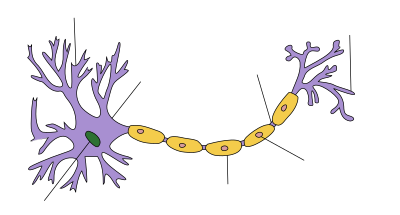
  • Association: this is probably the hardest one to argue for or against. Like cancer sticks after org@sm once you have an association it is hard to break. To break it you need to fight it for as long as it took you to establish it. Associations are hard wired in the brain, so you need to break the hard wiring. the wiring is done by linking neuron in a network, the stronger the association the strong the pathway is linking the neurons that remind us of the sensory experience we have as part of the association.
So here is my challenge anyone a study of actual coffee and either its short or long term affects that are negative place a comment here so I can also read it and publish it.

Tuesday, January 25, 2011

Another post that gives Reasons to Drink Coffee

This is an extract from:

Greenliving's Reasons to drink coffee


"According to research, the potential benefits of caffeine for maintenance of proper brain functioning has only recently begun to be appreciated....".
"In a study published in a special supplement to the Journal of Alzheimer’s Disease, researchers explored the potential benefits of caffeine and found substantial evidence that it may be protective against the cognitive decline seen in dementia and Alzheimer’s disease."
For the study (“Therapeutic Opportunities for Caffeine in Alzheimer’s Disease and Other Neurodegenerative Diseases”) a group of international experts looked into the effects of caffeine on the brain. The result was a collection of original studies exploring  a number of  topics ranging from molecular targets of caffeine, neurophysiological modifications and adaptations, to the potential mechanisms underlying the behavioral and protective actions of caffeine in distinct brain pathologies. Here’s a brief summary of what they found:
  • Caffeine has a positive effect on cognition, memory performance, and the ability to complete complex tasks.
  • An inverse association between regular caffeine consumption and the incidence of Parkinson’s disease was found–in other words, caffeine looks to be protective against Parkinson’s disease.
  • The consumption of moderate amounts of caffeine was seen to decrease the cognitive decline associated with aging, as well as the incidence of Alzheimer’s disease.
  • Caffeine prevented motor deficits, normalized brain function, and prevented brain degeneration.
  • Caffeine improves a sense of well-being, happiness, energy, alertness and sociability.
  • Caffeine  enhances aerobic endurance.
  • Consumption of coffee can lead to a decreased risk of Type 2 diabetes.
  • Coffee has a whopping amount of antioxidants–on average, Americans receive 1,299 milligrams of antioxidants  from their 1.64 cups of daily coffee. The closest competitor was tea at 294 milligrams. Rounding out the top five sources were bananas, 76 milligrams; dry beans, 72 milligrams; and corn, 48 milligrams.

Sunday, October 17, 2010

Some more videos I found on coffee

Health and Coffee more...

Here are a a few more videos I found about Health and coffee.

My take on it has always been if you need coffee to wake up, or to get through the day, than just like any other substance you are abusing it. If you can be off coffee for 48hrs and there are no side effects, than you have no adverse affect, just like once again any other substance.

Better still find and drink the best quality coffee and make sure it is roasted fresh so that none of the oils are exposed. The better the quality of coffee the lower the caffeine. The shade grown varietals are the best.

Health Benefits From Coffee: Medicine Matters

Some regurgitated stuff presented in a different way.


Coffee: New Health Benefits

News channel stuff, but actually some good advice "Perks of coffee", haha. If you like the coffee drink it, and enjoy it.


How Caffeine works

I good explanation about the affects on the brain.


By the way drinking specialty grade shade grown coffee 3 cups a day is about 140 mg caffeine.

Tuesday, October 5, 2010

Coffee Health Benefits

Mounting evidence ignored by Health practitioners

How many studies have to be done on coffee before the tipping point is reached and people actually believe that there are health benefits to drinking coffee.

Two items I found this week, with out looking

Link 1

Drinking coffee and prevention of Diabetes. But will bleech flour ever make it to the health practitioners hit list?
CBS: Drink up to prevent Diabetes

Link 2

This was on How it works, and now it is on You Tube,


Link 3

This is translated (thanks to Goggle) from the Confidential news letter:

Researchers at the coffee world are meeting in Bali, Indonesia to attend the greatest event (sic) in world coffee science. The twenty-third World Conference on Coffee Science, sponsored by ASIC (Association for Science and Information Café) addresses the main themes of the area as coffee and health effects of consumption of coffee on human physiology, the chemistry of coffee processing, genetics, quality, certification, cultural and sustainability.

The opening event was on Sunday, October 01 and was attended by the Minister of Agriculture of Indonesia. On Monday, were presented important work on coffee and health. The highlight was work that showed that moderate coffee consumption is beneficial in preventing cardiovascular disease, especially in women. Other good news comes from the beneficial association of coffee consumption in the prevention of Alzheimer's disease and combating the symptoms of disease, such as memory loss. Brazilian researchers presented papers on the antibacterial effect of coffee.

On Tuesday, two days, came the work on the chemistry of coffee. The complexity of the various chemical components that make up a cup of coffee was highlighted. Swiss researchers also compared the different aromas and flavors of coffee with an orchestra. A well-tuned orchestra is a pleasure for the consumer. Over 800 substances have been found in chemical analysis and many of them are related mainly to the aroma of coffee.

Researchers from Paraná presented a study examining the presence of lipids beneficial to human health in several varieties of coffee. Already researchers at the Federal University of Minas Gerais (UFMG) presented an interesting paper that uses infrared spectroscopy to separate roasted and ground coffee beans originating from defective (PVA) rice not bad.


Brazil is represented at the event by researchers from ITB UFLA, UFMG, IAPAR, UFRJ and other institutions.

Read original here: http://www.coffeeclubnetwork.com/redes/form/post?pub_id=2140